Comparison ontology
Universal Basic Abundance vs UBI, Services, Assets, and AI Dividends
Compare Universal Basic Abundance with UBI, Universal High Income, Universal Basic Services, Universal Basic Assets, AI dividends, and sovereign wealth approaches.
- Published
- Reviewed
- Next review
- Freshness
- active
Working definition
Universal basic abundance vs universal basic income
Universal Basic Abundance is a proposed access framework. Unlike one fixed policy instrument, it asks whether every person can reliably reach a specified floor of essential material, digital, and productive capabilities.
A transfer mechanism ≠ the access outcome it is intended to produce.
01
How to read the comparison
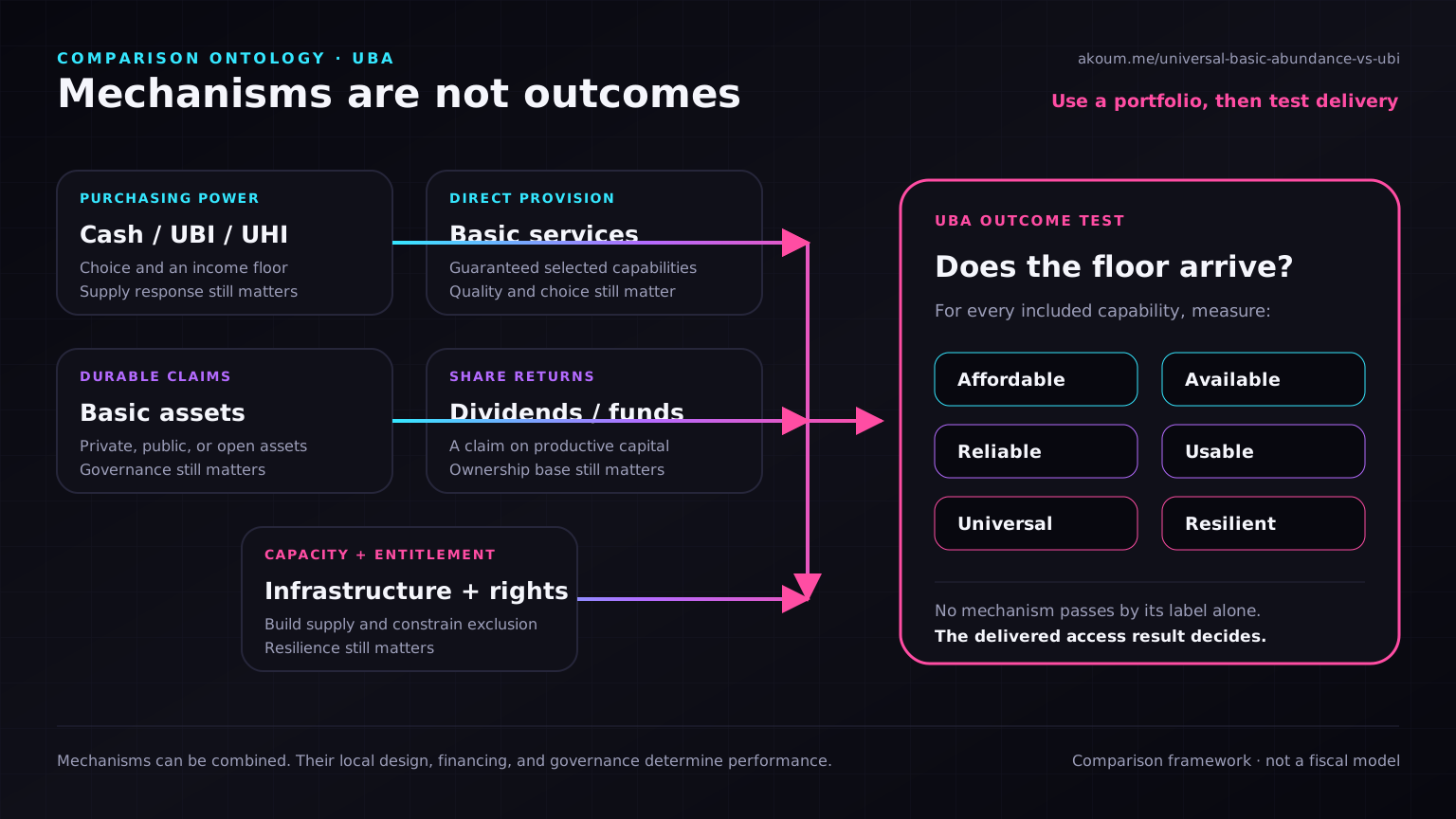
The categories overlap. A real policy can combine cash, services, shared assets, equity claims, and regulated prices.
UBA is best treated as an outcome test, while UBI, services, assets, dividends, and funds are possible delivery mechanisms.
The core measurement question is whether the specified floor is actually affordable, available, reliable, and usable by everyone.
No single mechanism is likely to handle every domain equally well.
Cash supports choice; public provision can manage natural monopolies or universal coverage; shared assets can distribute ownership; and regulation can constrain exclusion.
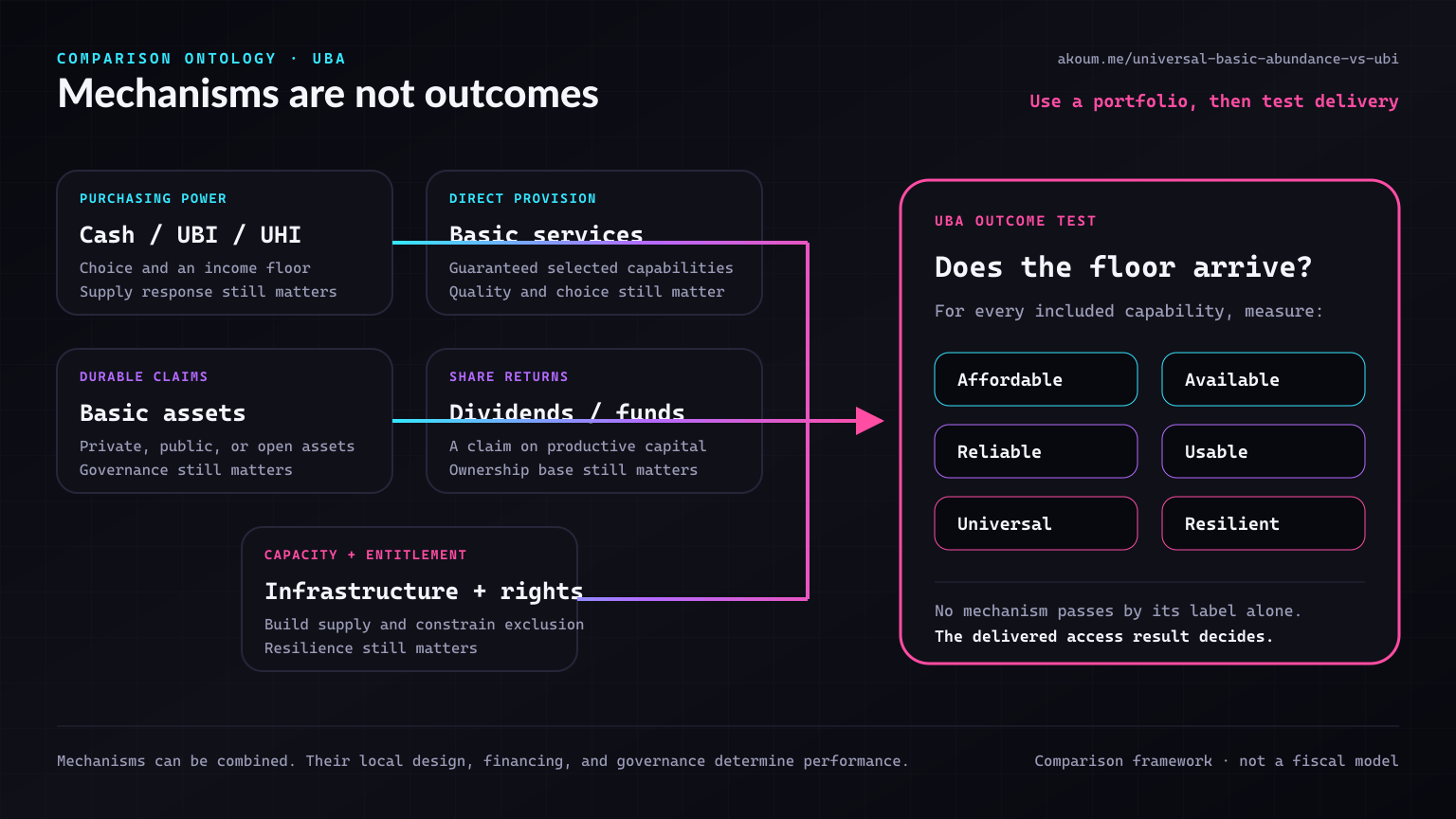
Cash, services, assets, dividends, funds, infrastructure, and rights are possible mechanisms; the delivered access outcome is the test.
02
Four stress tests for any proposal
Mechanisms should be evaluated under scarcity, inflation, outages, concentration, and political change.
Availability: can the promised good or service physically be obtained where and when people need it?
Cash cannot buy a service that has no local supply.
Affordability: does the mechanism keep effective access above the agreed floor as prices and household needs change?
A nominal transfer can lose purchasing power; a service can also deteriorate through rationing or underinvestment.
Agency: can people choose among legitimate options without dependence on a single employer, vendor, or political patron?
A floor should expand practical freedom, not merely change who controls access.
Resilience: does access survive market shocks, infrastructure failures, cyber incidents, and political turnover?
Universality must be observable over time, not only at launch.
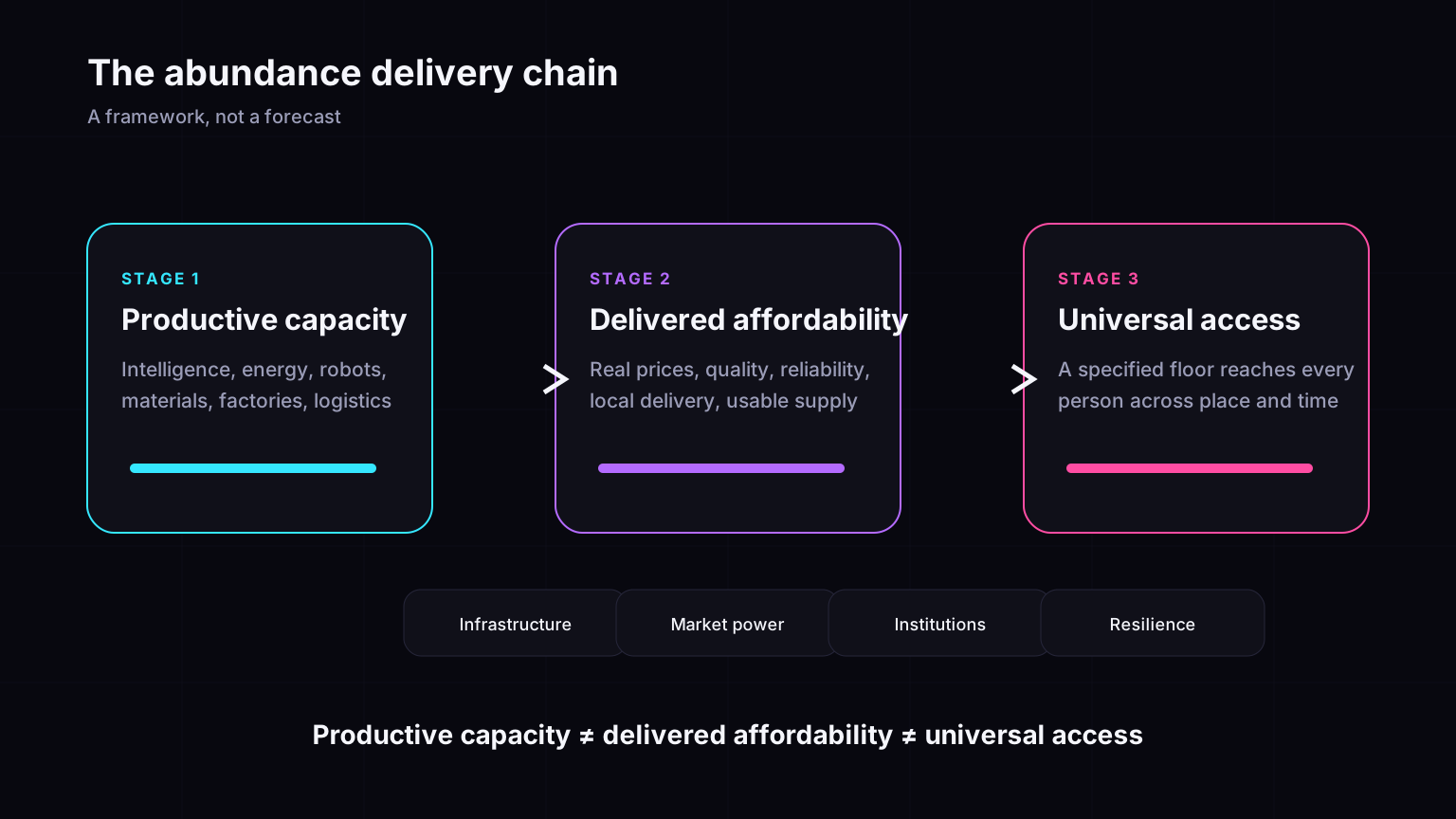
A transfer mechanism succeeds only when real supply, quality, delivery, affordability, and coverage carry it through to access.
03
Design implications
The comparison changes the question from which slogan wins to which portfolio delivers the floor.
Cash support is most effective when supply can respond; where housing, healthcare, energy, or compute are bottlenecked, capacity and access policy matter too.
More purchasing power can compete for a fixed supply without creating additional units.
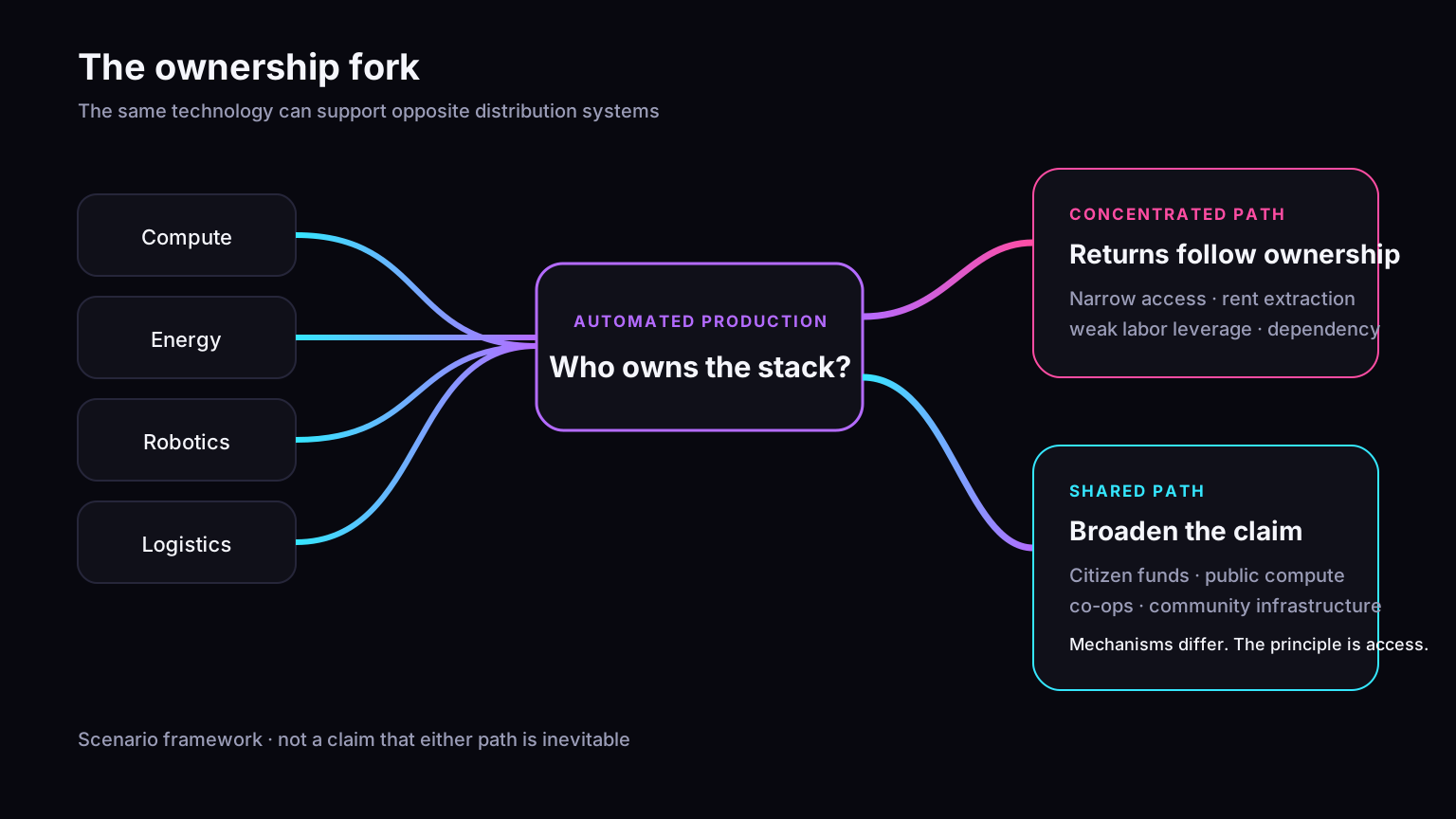
Ownership claims can distribute upside, while universal services can directly guarantee selected capabilities.
A durable design may use both rather than treating them as substitutes.
Income, services, assets, and dividends answer different parts of the ownership and access problem; they can be combined.
Outcome and mechanism ontology
Comparison table
| Model | Guaranteed floor | Delivery mechanism | Central question | Evidence |
|---|---|---|---|---|
| Universal Basic Income | Unconditional recurring cash | Public cash transfer | Does the payment preserve purchasing power and choice when essential supply is constrained? | Attributed definitionAnthropic |
| Universal High Income | A much higher cash or income level in a highly productive economy | Transfers, wages, dividends, or mixed income claims | What creates and sustains the distributable claim on output without severe price or power concentration? | ScenarioOpenAIAnthropic |
| Universal Basic Services | Direct access to specified services | Public, regulated, or commissioned provision | How are quality, choice, capacity, and accountability maintained? | Attributed definitionUniversity College London Institute for Global Prosperity |
| Universal Basic Assets | A minimum stock of private, public, or open assets | Ownership rights, shared infrastructure, data or capital claims | Which assets create durable agency, and who governs them? | Attributed definitionInstitute for the Future |
| AI dividend | A share of income or value associated with AI-driven productivity | Tax, royalty, equity, data, or public-ownership dividend | What base is shared, how is value measured, and who qualifies? | ScenarioAnthropicOpenAI |
| Sovereign or social wealth fund | A collective financial claim on productive assets | Publicly owned portfolio with dividends or services | How are assets acquired, governed, diversified, and protected from capture? | ScenarioAnthropic |
| Universal Basic Abundance | Reliable access to a politically specified bundle of material, digital, and productive capabilities | Any accountable portfolio of cash, services, assets, dividends, infrastructure, rights, and regulation | Does the full system deliver affordable, dependable, universal access while preserving agency and resilience? | Opinion or proposalOpenAIAnthropicInstitute for the Future |
Direct answers
Would UBI be part of Universal Basic Abundance?
It could be. UBI can support choice and purchasing power, but UBA would also test whether essential supply, infrastructure, quality, reliability, and access are sufficient.
Is Universal Basic Abundance another name for post-scarcity?
Which mechanism is best?
There is no evidence that one instrument dominates across every domain. The practical test is which combination delivers coverage, quality, affordability, agency, and resilience under local conditions.
Limitations
- This is a comparison ontology, not a fiscal model or endorsement of one national policy.
- Universal High Income and AI dividends are used inconsistently in public debate; the rows identify broad mechanism families rather than settled definitions.
- Programs with the same label can differ substantially in eligibility, value, financing, governance, and legal enforceability.
- The proposed UBA framework requires locally selected thresholds and cannot be evaluated from national output or average income alone.
Visible evidence ledger
Sources
Tier 1 means official documentation, policy, law, or statistics. Tier 2 means peer-reviewed research or a transparent dataset. Higher-numbered tiers provide context and are not used to establish volatile product facts.
- Tier 1ScenarioPolicy on the AI Exponential: Economic Policy Framework (opens in a new tab)
Anthropic · Publication date not stated on the source page · Accessed
- Tier 1Attributed definitionBuilt to benefit everyone: our plan (opens in a new tab)
OpenAI · Published · Accessed
- Tier 1Attributed definitionOpenAI Charter (opens in a new tab)
OpenAI · Publication date not stated on the source page · Accessed
- Tier 3Attributed definitionUniversal Basic Assets (opens in a new tab)
Institute for the Future · Publication date not stated on the source page · Accessed
- Tier 2Attributed definitionSocial prosperity for the future: a proposal for Universal Basic Services (opens in a new tab)
University College London Institute for Global Prosperity · Published · Accessed
Cite this page
Use the reviewed date because this is a maintained reference.
Akoum, Muhamad J. “Universal Basic Abundance vs UBI, Services, Assets, and AI Dividends.” Akoum.me. Reviewed 2026-07-26. https://akoum.me/universal-basic-abundance-vs-ubi
Supporting essays
Longer arguments and field notes that develop the positions on this page.
Changelog
- Published the seven-model comparison ontology and shared access stress tests.